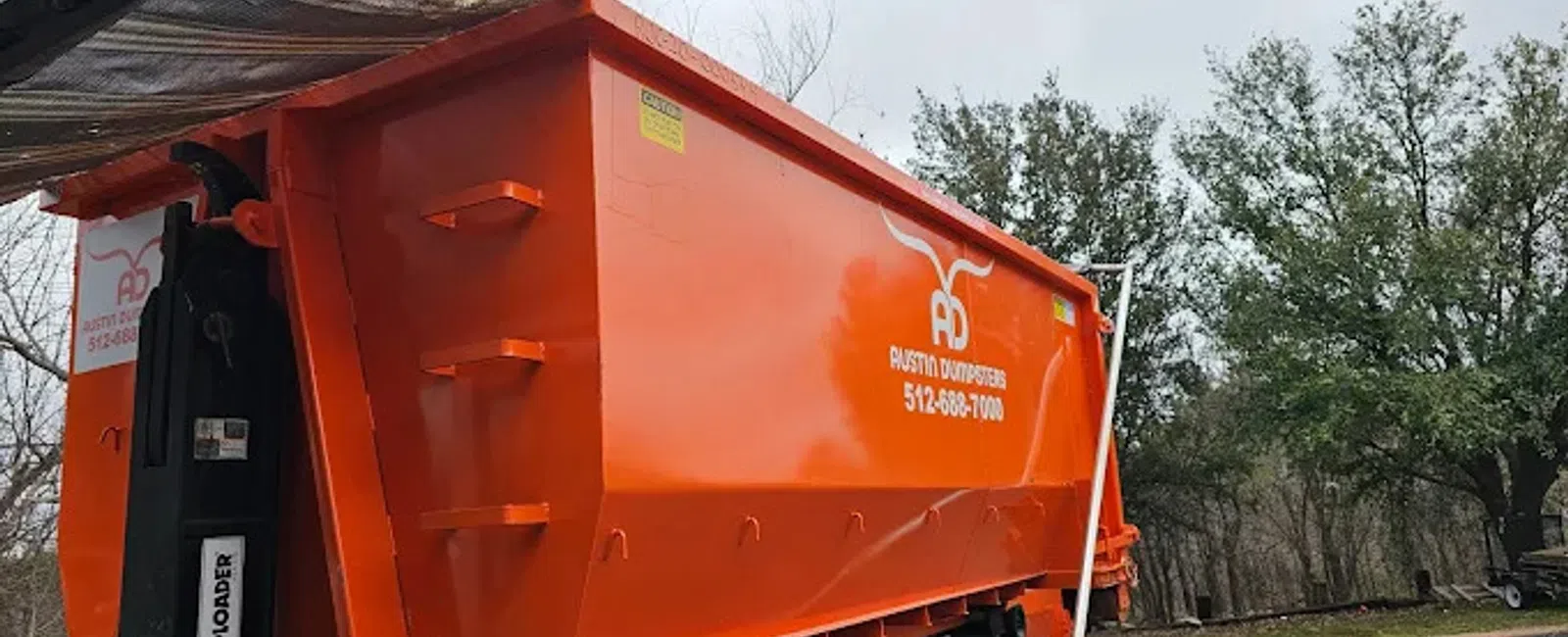
Every roll-off container has two limits, not one. The size on the quote is a volume limit, measured in cubic yards. The weight allowance is a separate number, measured in tons, and it is the one most people hit first.
A 20-yard container filled with old furniture and cardboard will run out of room long before it runs out of weight. The same container half full of tile will be over its allowance with visible space left at the top. Which limit you hit depends entirely on what you are throwing away.
What Common Debris Actually Weighs
These are planning figures rather than exact numbers, since moisture, thickness, and material quality all move them. They are close enough to size a job.
- Household junk and general cleanout debris: roughly 250 to 300 pounds per cubic yard
- Carpet and padding: around 300 pounds per cubic yard
- Roofing shingles: around 250 pounds per cubic yard
- Drywall and plaster: around 500 pounds per cubic yard, or about 50 pounds per 4-by-8 half-inch sheet
- Yard waste and brush: 500 to 600 pounds per cubic yard, more when wet
- Scrap metal: around 1,000 pounds per cubic yard
- Broken concrete, brick, and asphalt: roughly 2,000 pounds per cubic yard
The spread from top to bottom is close to eight to one. That is why two containers of the same size can produce completely different outcomes at the scale.
Roofing Has Its Own Math
Roofers estimate in squares, and a square covers 100 square feet of roof. Three bundles make a square.
A bundle of three-tab asphalt shingles runs about 60 to 80 pounds, putting a square somewhere near 180 to 250 pounds. Architectural shingles are heavier per bundle, and slate or tile is heavier again by a wide margin.
Run the multiplication before you book. A tear-off on a typical three-bedroom house is often 20 to 25 squares, which lands in the range of three tons for a single layer. A second layer doubles it, and older Austin homes frequently have one.
Heavy Material Goes in the Smaller Container
This is the part that sounds backward. For tile, concrete, brick, dirt, and stone, the right answer is usually a 10-yard rather than a 20-yard.
The reason is what the truck can legally carry. A large container filled with dense material exceeds axle weight limits before it fills, and a load a truck cannot legally haul is a load that does not leave your driveway. A smaller container keeps the total inside what the truck can lift and carry, which is why heavy debris and small containers go together.
If your project is mostly concrete, our post on Concrete Disposal in Austin and How Much Concrete Debris Weighs covers that material specifically.
Water Is the Variable Nobody Plans For
Debris that was comfortably inside its allowance on a dry day can be meaningfully heavier after a storm. Drywall, carpet, insulation, mattresses, and yard waste absorb the most, and a container sitting open through a wet Austin week can pick up real tonnage without anyone adding a thing.
Covering the load helps if the container will sit through rain. So does timing the tear-off of absorbent material for a dry stretch when the schedule allows.
How to Estimate Before You Book
Start with volume, then check weight against it.
Measure or estimate the debris in cubic yards, since a cubic yard is a cube three feet on each side and a pickup bed holds roughly two to three of them. Multiply that number by the per-yard weight of your main material from the list above. Compare the result to the weight allowance included with the container size you were considering.
If the answer lands close to the allowance, size down on volume and up on trips, or ask about a swap partway through. Two smaller pulls almost always beat one overweight container.
Mixed loads are easier than they look. Estimate by the heaviest material present rather than averaging, because a few hundred pounds of tile mixed into an otherwise light load moves the total more than it seems like it should.
What to Ask When You Book
Say what the material is, not just how much of it there is. "A garage of boxes and furniture" and "a garage of boxes, furniture, and the old tile we pulled off the patio" are different jobs, and the second one changes the container we send.
Our 10-yard fits a standard driveway and handles a garage cleanout or a single-room remodel, and it is also the size we send for tile, concrete, and dirt regardless of how little floor space they take. Renovations and roofing jobs usually take the 20-yard.
Weight allowances are included in the quote and vary by container size. Ask what yours is when you book, along with how overage is handled, since debris is weighed at the landfill after pickup and the ticket is what determines whether you went over.
Our exclusions are asbestos, chemicals and solvents, wet paint and oils, tires, batteries and electronics, appliances containing refrigerant, and medical waste, and the full list of what we cannot take covers the edge cases.
We deliver across Austin and 14 surrounding cities, and drivers put boards down on every drop.
Call or text (512) 688-7000 and tell us what the material is. We will size it for both limits and give you an all-in number before anything moves.