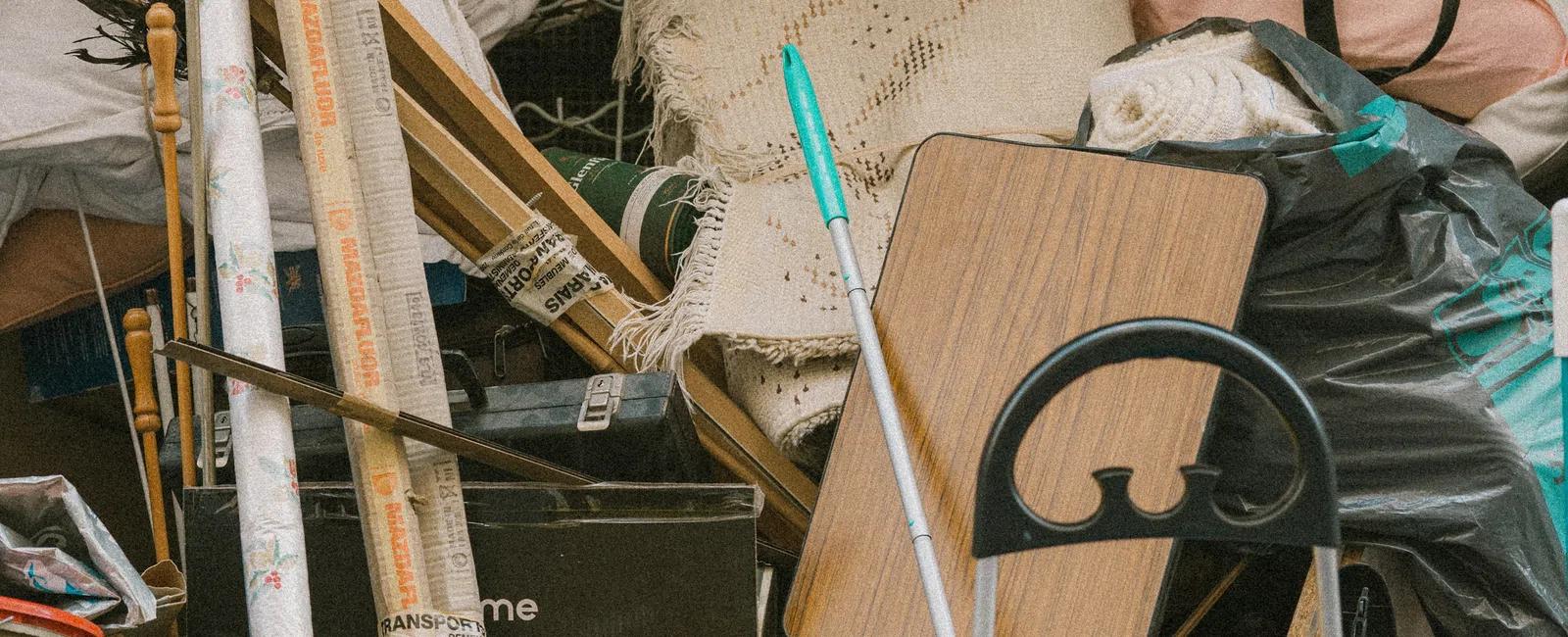
The fastest way to get rid of everything and move is to sort every item into one of four outcomes (keep, sell, donate, or toss), start four to six weeks before moving day, and save the trash for a single disposal push at the end. Working on a schedule gives buyers and donation centers time to take what still has value, and it keeps you from paying to pack and haul things you never wanted at the new place. The last step is clearing out whatever's left in one shot, so the old home is empty and ready for the final walkthrough.
Why Decluttering Before Moving Pays Off
Every item you keep costs you something on moving day. It needs a box, tape, a spot on the truck, and someone to carry it in and out. A worn recliner you plan to replace in a month still takes two people and a dolly to move, and you still have to figure out how to get rid of it at the new address.
Decluttering before moving flips that around. You pack less, the truck is smaller, or the trip is shorter, and you unpack into a house that only holds what you chose to bring. It also makes the move-out easier. Landlords, buyers, and property managers all expect a space, and a garage full of leftovers on the last day turns a clean exit into a frantic one.
We see this pattern on move-out deliveries all the time. People who start early fill the container steadily over a few days. People who wait until the final weekend end up loading at midnight with the moving truck already in the driveway.
How to Declutter Before a Move: A Week-by-Week Timeline
Spreading the work out is what keeps it manageable. A simple countdown looks like this:
- Six weeks out, walk through every room and write down the large items you won't be taking, such as furniture, old exercise equipment, and extra shelving. List anything worth selling right away, since buyers need time to show up.
- Four weeks out, work through one area at a time (closets, kitchen cabinets, garage, attic) and sort as you go. Drop off donations every week so the piles never take over a room.
- Two weeks out, finish the last sales, confirm pickups for sold items, and schedule disposal for everything that's left.
- Moving week, pack what you're keeping, load the trash, and have the leftovers hauled away after the truck leaves.
Start With the Rooms You Use Least
Garages, attics, storage closets, and spare bedrooms are where years of "I'll deal with it later" end up. Start there, because those spaces hold the most junk and the fewest things you need day to day. Clearing the garage first also gives you a staging area for boxes once the packing starts.
Make Each Decision Once
The biggest time sink is picking something up, putting it back down, and revisiting it next week. Handle each item one time and send it straight to a pile. A good test is the one-year rule. If you haven't used it in the past year and it doesn't carry real sentimental value, it doesn't need to ride on the truck. Duplicates are easy cuts too. Most kitchens have three can openers and more mugs than anyone could use.
What to Do With Unwanted Stuff When Moving
Once everything is sorted, each pile has a clear exit.
Sell the Items Worth the Effort
Furniture in good shape, tools, outdoor equipment, and newer electronics usually sell online or at a yard sale. Be realistic about pricing and timing. If something hasn't sold two weeks before the move, drop the price or move it to the donate pile so it doesn't end up in your way on the last day.
Donate the Usable Middle
Clean clothing, kitchenware, books, toys, and sturdy furniture can go to donation centers, shelters, and community groups. Call ahead on larger pieces. Many donation centers turn away stained, torn, or broken furniture, so those items belong in the toss pile instead.
Toss the Rest the Right Way
Broken furniture, old carpet, worn-out decor, scrap wood, and general household junk can all go straight into a roll-off dumpster. A handful of common household items can't, because they need special handling:
- Paint, stains, solvents, and thinners
- Household chemicals and motor oil
- Tires and car batteries
- TVs, computers, and other electronics
- Fridges, freezers, and AC units that contain refrigerant
Set those aside as you sort so they don't get buried in the pile. Local hazardous waste drop-off sites, retailers, and recycling centers usually take them, and pulling them out early saves you from digging through a loaded container later. Our homepage has a quick rundown of what can and can't go in a dumpster.
How to Get Rid of Stuff When Moving in One Trip
Small trash runs add up fast. A packed pickup truck holds a fraction of what a whole-house cleanout produces so that a single move-out can mean a dozen trips to the landfill, plus the time spent loading, unloading, and waiting in line. A roll-off dumpster in the driveway replaces all of that. You toss things as you sort, and the container leaves with everything at once.
Picking the Right Dumpster Size for a Move-Out
Most move-out cleanouts land in one of two sizes. A 10-yard container handles a garage cleanout or a smaller move-out. A 20-yard container fits a whole-home cleanout, including bulky furniture. Household junk and furniture are bulky but light, so most move-outs fill the space long before they approach the weight limit. If you're unsure, our roll-off dumpster sizes page lists each container's dimensions so you can compare.
Timing the Delivery
Have the dumpster delivered a few days before moving day, not the morning of. A standard rental includes seven days, which gives you room to load as you pack, clear the garage, and handle the last-minute discoveries that always turn up under beds and in the back of closets. Once the truck pulls away and the house is empty, call for pickup, and the container is gone. If you're running behind, same-day dumpster delivery is available when you call by noon.
Loading Smart
Put flat, heavy pieces like broken tables and old doors on the bottom, then fill the gaps with bagged trash and smaller items. Break down furniture where you can, since a disassembled dresser takes up far less room than an intact one. Keep the load level with the top edge of the container so you can haul it safely. If you don't have the time or help to load it yourself, our junk and bulk trash removal crew can load it and haul it away.
Common Mistakes When Getting Rid of Everything Before a Move
The most common mistake is packing junk to "sort out later." It never gets sorted. It just moves to a new garage and costs you twice. Make the call before it goes in a box.
Another is waiting until the final weekend to deal with the big stuff. Sofas, sectionals, and bulky appliances are the hardest items to get rid of, so plan for them first, not last. And don't assume a donation center or a buyer will take everything. Have a backup plan for anything that doesn't sell or get accepted, so it isn't still sitting in the living room when the new owners arrive.
Get Your Move-Out Cleanout Handled
Getting rid of everything before a move comes down to starting early, making each decision once, and clearing the leftovers in one trip instead of twelve. Austin Dumpsters delivers driveway-friendly residential dumpsters for move-out and whole-home cleanouts, with protective boards under every drop and pickup as soon as you're done. Call (512) 688-7000 or schedule your delivery online, and tell us what you're clearing out so we can size it right.